Seychelles, Maldives
or Mauritius?
How to choose.
Every year I am asked the same question, usually by someone who has decided they are finally going to do the Indian Ocean and wants to know which island. The honest answer is that it depends entirely on who you are and what you want to feel. These are three categorically different destinations that happen to share the same body of water. Choosing between them on the basis of a photograph would be like choosing between the Serengeti, the Okavango, and the Masai Mara because they all have elephants.
I have designed journeys to all three for many years, and I have watched clients return from each one with the kind of contentment that only comes from being in exactly the right place at the right time. I have also watched clients return quietly deflated, not because the destination failed them, but because they were in the wrong one. That deflation is almost always the result of a decision made on the basis of a photograph rather than a conversation.
This piece is the conversation.
The Maldives: the architecture of paradise
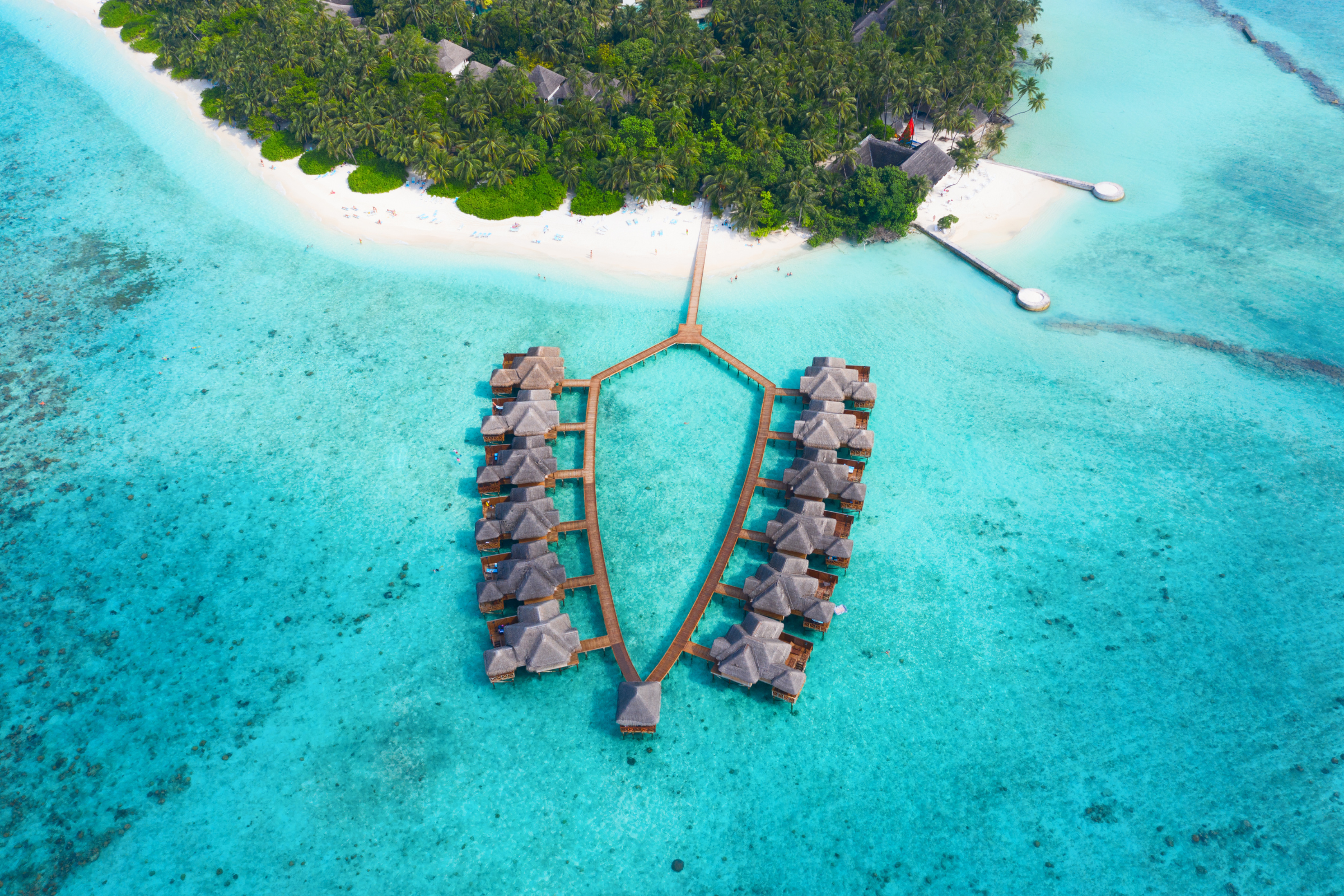
Let us begin with the Maldives, because it is where most people begin — and for good reason. There is no other destination in the world that delivers the visual impact of a Maldivian overwater villa with quite the same reliability. The photographs are accurate. The turquoise is that turquoise. The water is that clear. The bungalow does extend over the lagoon on stilts, and yes, there is a glass panel in the floor through which you can watch the fish.
What the photographs do not tell you is that the Maldives is, geographically speaking, a flat archipelago of approximately 1,200 coral islands distributed across roughly 90,000 square kilometres of Indian Ocean, most of which are barely a metre above sea level. There is no topography. No hillside villages. No jungle. No significant cultural history that is accessible to the short-stay visitor. The Maldives offers one thing, and it offers it with an excellence that is difficult to overstate: a completely private, completely immersive relationship with the Indian Ocean itself.
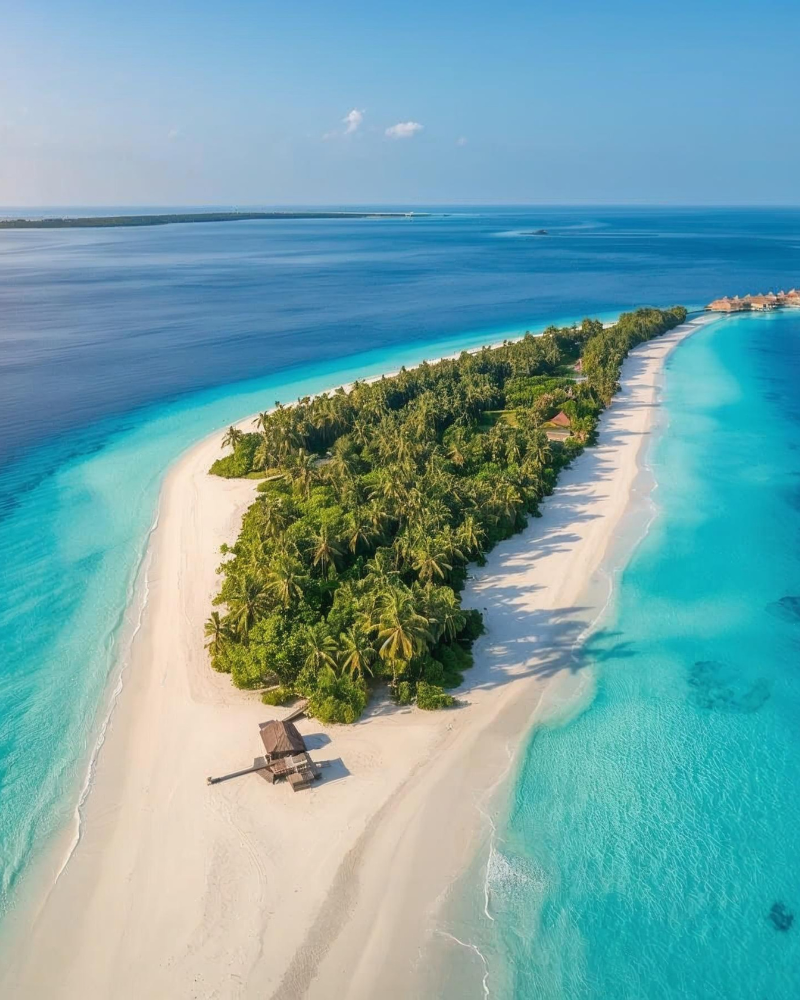
This makes it the finest destination in the world for a particular kind of traveller: someone who wants to entirely stop. Someone who has been working at pace for a year and needs not stimulation but its complete absence. Someone for whom the definition of a perfect day is sunrise over water, a breakfast they did not have to organise, snorkelling on a house reef of extraordinary quality, and an evening so quiet they can hear the ocean from the bed.
Worth noting: the Maldives that I recommend to clients is not the Maldives of the large all-inclusive resort. It is the Maldives of the private island and the boutique property — Soneva Fushi, Six Senses Laamu, North Male Atoll's finest handful of villas — where the ratio of space to guests produces something that feels genuinely exclusive rather than merely expensive. These are properties where the service anticipates rather than responds, where the food would hold its own in any capital city, and where the natural environment has been protected with a seriousness that shows.
The critical question to ask before booking any Maldivian property: what is the house reef like? For the snorkelling and diving client, this single variable matters more than the thread count of the linen. The best house reefs in the Maldives are extraordinary ecosystems of manta rays, reef sharks, hawksbill turtles, and more species of reef fish than most people have names for. The worst are bleached and disappointing. I know the difference, and it shapes every recommendation I make.
"The Maldives does not need to be justified. It simply needs to be the right choice for the right person at the right moment. When those three things align, there is nowhere quite like it."
Dalene, Founder, Atlas AtelierThe Seychelles: the world before it was tamed
The Seychelles is what the Maldives would be if you added granite mountains, ancient forest, giant tortoises, and the particular quality of wildness that comes from an archipelago that existed in near-total isolation for millions of years. It is also, at its highest level, among the most extraordinary places on earth.
The inner islands — Mahé, Praslin, La Digue, and the private islands beyond them — each have a distinct character that rewards the traveller who understands the difference. Mahé is the most accessible, the most developed, and the largest island in the group, with the international airport and a range of properties from the excellent to the exceptional. Praslin is where the Vallée de Mai sits: a primordial forest of Coco de Mer palms, designated a UNESCO World Heritage Site, unchanged since the Jurassic era, that produces the largest seed in the plant kingdom and a quality of silence that genuine wilderness delivers. La Digue is somewhere closer to the 1970s than the present, reached by boat, navigated by bicycle, and still possessed of a pace of life that makes the rest of the world feel slightly deranged.
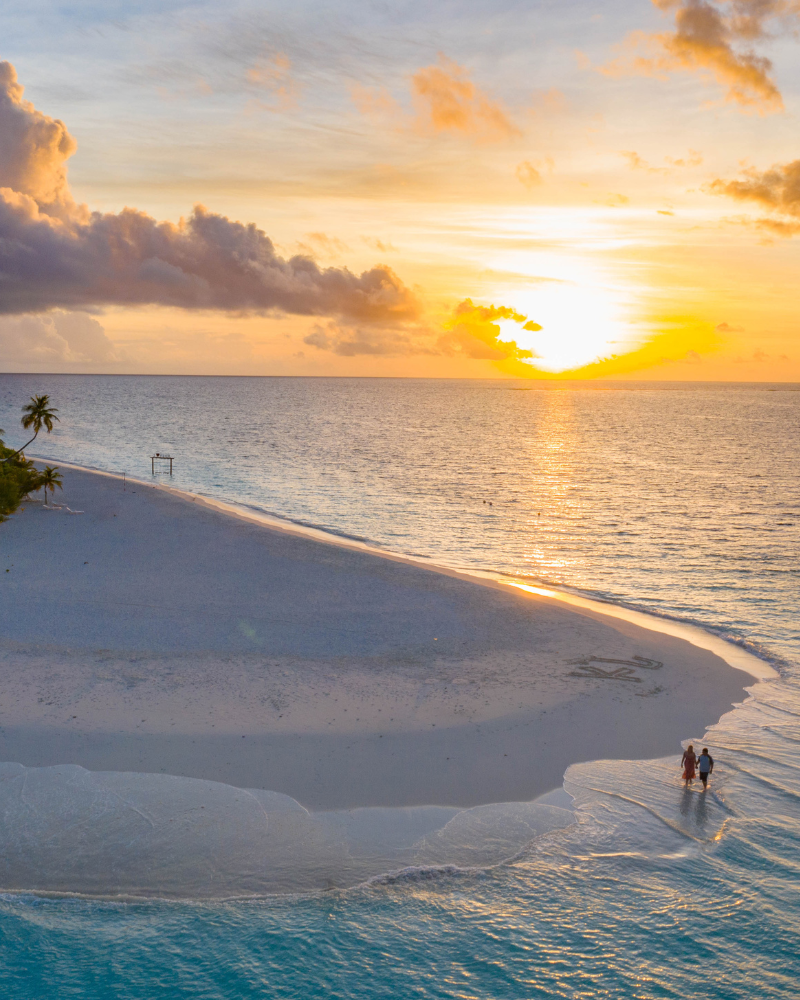
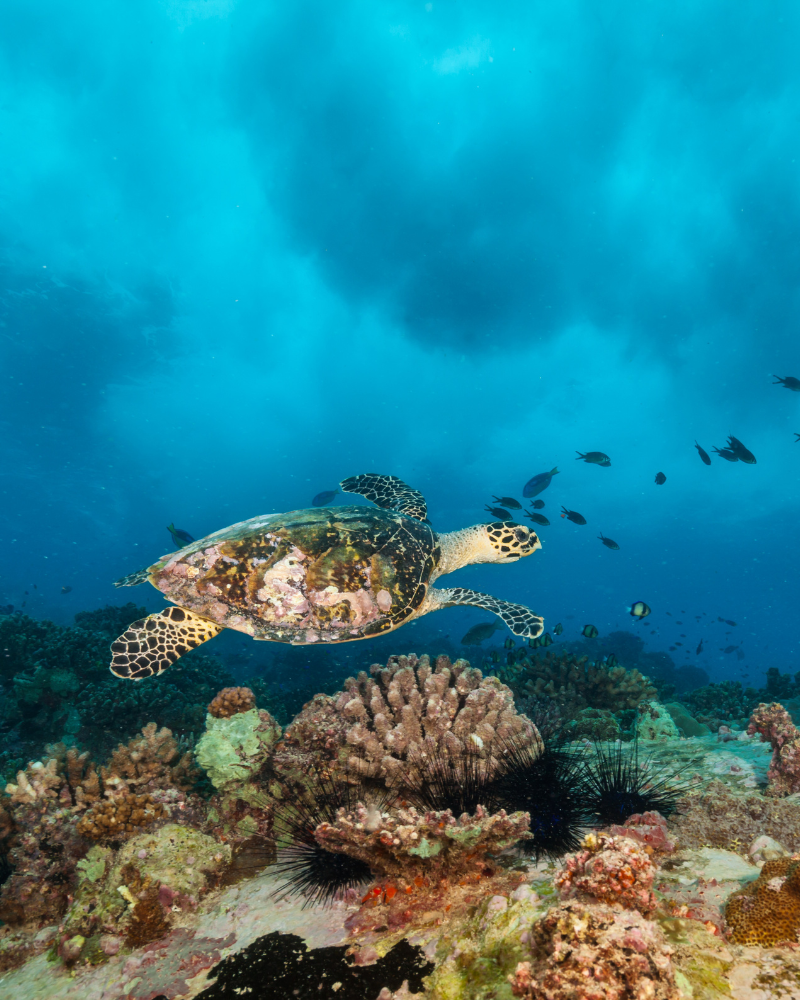
And then there are the private islands. North Island, with its eleven villas and 201 hectares and one of the most ambitious conservation programmes in the archipelago's history. Frégate Island Private, where hawksbill turtles nest on eight separate beaches and the magpie robin — once reduced to a global population of fewer than twenty birds — breeds in the forest above the villas. These are not hotels in any conventional sense. They are, to borrow the word, sanctuaries: places where the accumulated weight of the modern world lifts with unusual speed.
The Seychelles suits the traveller who wants beauty to be active rather than passive. Who wants to walk as well as swim. Who wants the landscape to contain surprises. Who, ideally, combines it with an East African safari — Nairobi to Mahé is a direct and seamless connection — and wants the contrast between the intensity of the bush and the surrender of the island to be part of the experience itself.
Worth noting: the Seychelles has two seasons defined by the trade winds, and the wrong time of year for the wrong island can produce seas that are choppy on one coast while the other remains calm. This is the kind of detail that matters and that most booking engines do not explain. January and February bring the north-west trades, which favour the south-east coasts. The shoulder months of April, May, October, and November are when both coasts settle and the diving visibility reaches its best.
Mauritius: the civilised island
Mauritius is frequently underestimated, and I find this curious. It is the most accessible entry point to the Indian Ocean at the premium level, the most varied island of the three, and the one that combines the beach experience with a cultural and culinary richness that the Maldives cannot offer and the Seychelles offers only partially. It is also, for the post-safari traveller coming out of Johannesburg, the most natural extension — a four-hour direct flight that deposits you in an island of considerable sophistication.
The island is large enough to feel genuinely varied. The north is drier, flatter, and more developed, with a concentration of beach resorts along Grand Baie that caters to the mid-market. It is not where I send my clients. The west coast — from Flic en Flac down through Black River towards Le Morne — offers the finest diving on the island, calmer seas between June and October, and the properties that meet Atlas Atelier's standard: One&Only Le Saint Géran on the east coast, the Lux* collection, the Four Seasons on the Anahita lagoon in the east, and Shanti Maurice in the south for those who want something quieter and more intimate.
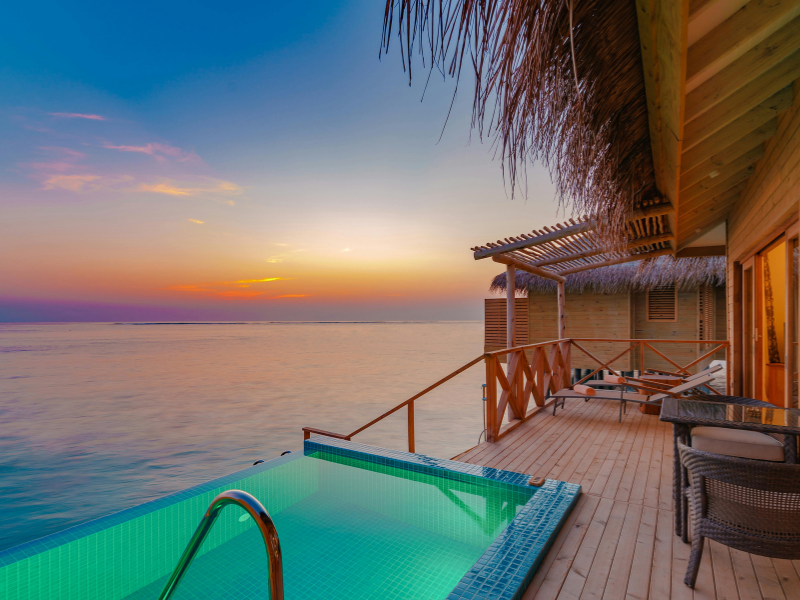
The case for Mauritius over the others is, broadly, the case for complexity over purity. The Maldives gives you one thing and gives it perfectly. Mauritius gives you several things and gives most of them extremely well. There is a working island behind the resort zone: sugar cane fields, Creole cooking of genuine quality, a Hindu temple the colour of an over-ripe mango, a market in Port Louis that smells of spices from three continents. You do not have to engage with any of it, but the option is there, and for the traveller who finds pure resort life slightly claustrophobic after four days, it is the difference between contentment and restlessness.
Mauritius is also, worth saying directly, the best choice for families with children. The properties are genuinely family-orientated rather than merely tolerant, the island is safe and easy to navigate, the range of activities is broad, and the flight time from both London and Johannesburg is manageable with young children in a way that the Maldives — which requires a seaplane or speedboat transfer on top of the long-haul flight — frankly is not.
Overwater architecture, extraordinary house reefs, and the complete surrender of a flat coral island. No topography, no cultural programme, no agenda. For those who want to stop entirely and do it beautifully.
Granite peaks, ancient forest, giant tortoises, and the Indian Ocean at its wildest and most beautiful. For those who want nature to feel present rather than decorative, and for those pairing it with an East African safari.
A sophisticated island with cultural depth, excellent cuisine, and properties that genuinely work for families. The most accessible entry point to the Indian Ocean at the premium level. The natural choice after a Southern African safari.
The question nobody asks
There is a question I ask every client who comes to me for an Indian Ocean journey, and it is not which island. It is: what are you coming from, and what do you need to come back as?
The person who has spent six months under sustained professional pressure and needs to be entirely unreachable is a Maldives client. The person who has done several luxury beach holidays and finds themselves vaguely bored by the fourth day of uninterrupted sunshine is a Seychelles client. The person who is combining the Indian Ocean with a safari and needs the island to feel like a reward rather than a challenge is a Mauritius client.
None of these is a lesser choice. They are different answers to the same question, and the rightness of the answer depends entirely on the person asking it.
The right Indian Ocean island is the one chosen for the right reasons — not the most photographed one, and not the most expensive one. Here is how I summarise it.
The question I am most often asked at the end of this conversation is: but which would you choose? The honest answer is that I have loved each of them for different reasons at different moments in my life. The Seychelles, with its wildness and its geological improbability, is the one that consistently surprises me. The Maldives, at its finest, is the one that stills me. And Mauritius is the one I would take my daughter to first, for the same reason I would take any child somewhere that shows them the world is larger and stranger and more beautiful than they yet know.
Tell me which of those things you need. I will tell you which island.
I know which island.
Leave the rest with me.
The Maldives, Seychelles, and Mauritius each reward the right client in different ways. A conversation of twenty minutes will tell me which one is yours. I will design the rest from there.