Why Zimbabwe Is Different
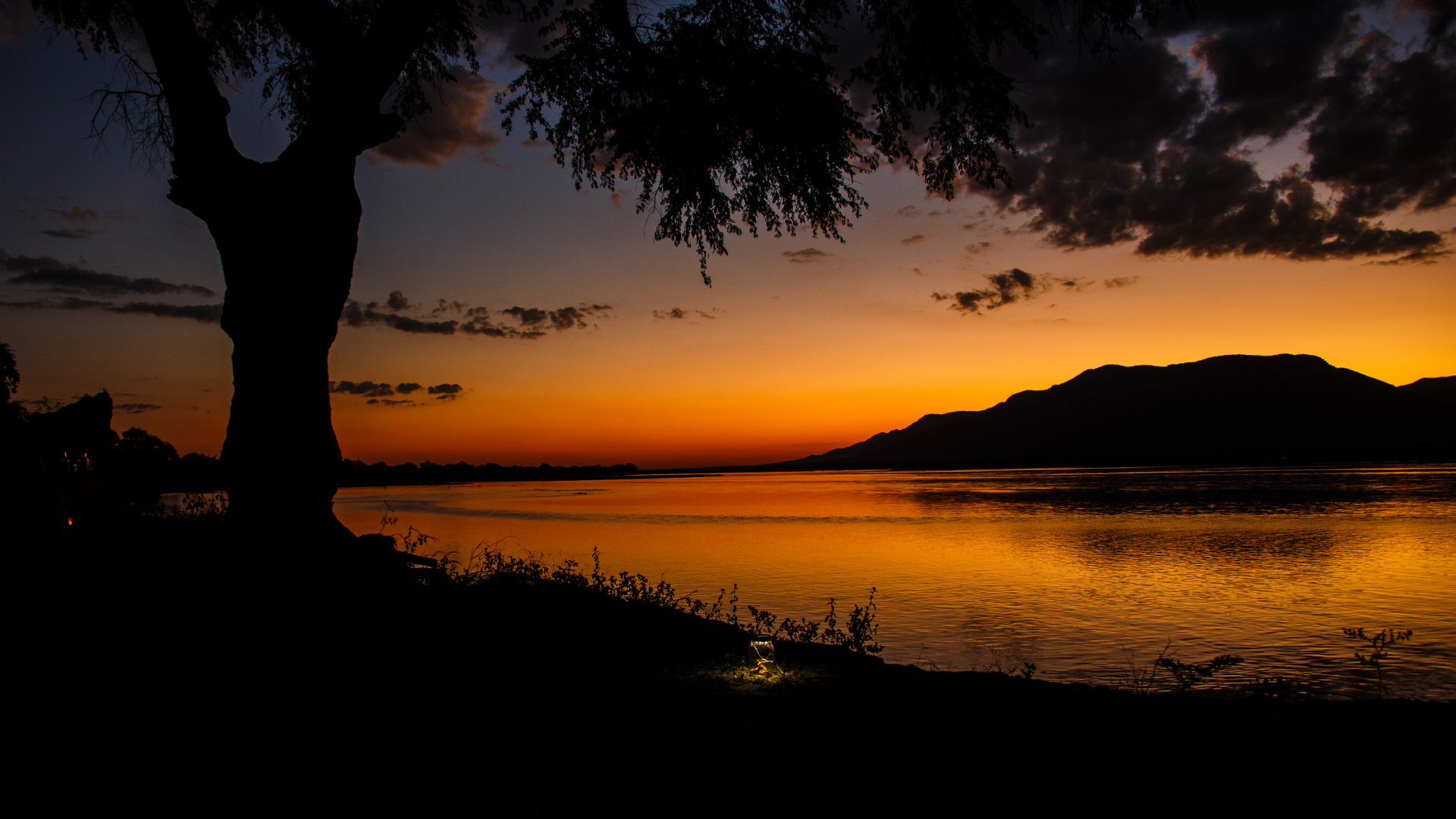
Something worth saying before we go any further. Dalene grew up around this country. She knows the smell of rain hitting dust in October. She knows the sound Hwange makes just before dawn: that low, rumbling silence that is somehow full of everything. She knows the way the light falls on the Zambezi in the late afternoon, turning the water a colour that does not have a name.
This guide is not written by someone who visited Zimbabwe once or twice and found it beautiful. It is written from a place of having lived alongside it for years.
Zimbabwe is not merely a safari destination. It is a country of extraordinary ecological wealth, a wildlife conservation story that is genuinely one of Africa's most remarkable, and a warmth of people that will, without warning, undo you completely. It is also significantly less visited than Kenya, Tanzania, or South Africa. That is not because it is less extraordinary. It is because fewer people know to go. You should be one of the ones who knows.
"Zimbabwe is the safari that stays with you longest: not because it is the most famous, but because it is the most real."
Dalene Ferreira · Founder, Atlas Atelier & Destination Africa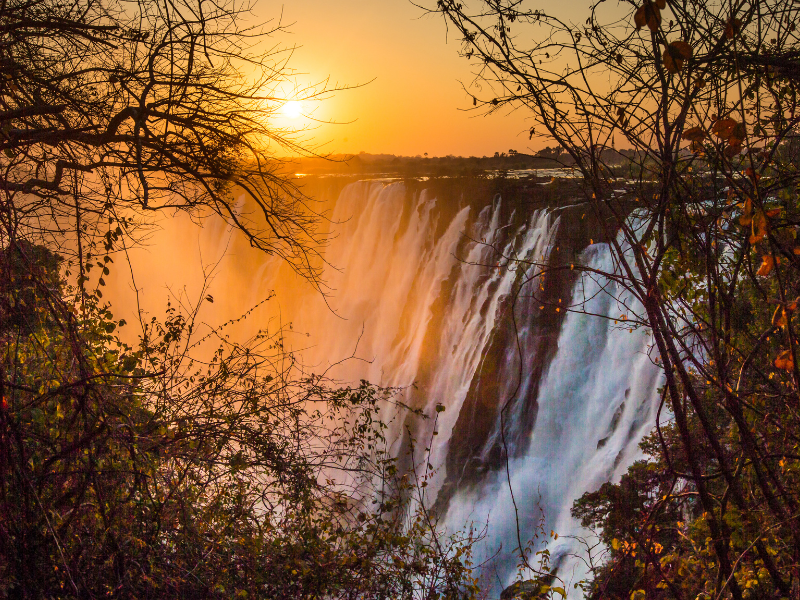
Victoria Falls — Mosi-oa-Tunya
The locals call it Mosi-oa-Tunya: the smoke that thunders. When you stand at the lip of the gorge and the spray soaks you through in seconds, you understand immediately why no photograph has ever done it justice. At full flood, Victoria Falls is the largest waterfall on earth by volume. The sound reaches you before the falls do. The spray can be seen and felt from kilometres away.
The Zimbabwean side is, without question, the superior vantage point. You walk the rainforest path with a guide who knows every fern, every bird call, every shifting viewpoint along the kilometre-wide curtain of falling water. There are seventeen viewing points. Each one is different. The best are the ones that no tour group ever reaches, because they require knowing which fork in the path to take.
Beyond the Falls
Victoria Falls town is small, manageable, and full of things worth doing. The sunset cruise on the Zambezi, upstream of the falls where the river spreads wide and the elephants come down to drink, is one of the most quietly extraordinary hours available anywhere in Africa. A game drive through Zambezi National Park, often overlooked in favour of the falls themselves, regularly produces lion, buffalo, and elephant sightings that would be headline events elsewhere.
The adventure activities are not for everyone, and that is entirely fine. The people who skip them in favour of a slower morning at the falls, a walk through town, and that Zambezi sunset tend to leave feeling they got the better version of the experience.
Where to Stay
The accommodation question matters enormously at Victoria Falls. Being well-positioned changes the entire character of the visit.
Perched above the gorge with elephants moving freely through the grounds at dawn. Each suite has an unobstructed view of the spray rising from the falls. This is the definitive Victoria Falls experience. Extremely limited availability. Enquire well in advance.
Set within a private reserve adjacent to the national park. Game drives on the private reserve produce sightings without the national park crowds. A property that surprises most guests with how much wildlife is right there.
The grand dame of colonial African hospitality, a hotel that has been receiving guests since 1904 and whose terrace, with its view of the bridge and the spray of the falls, remains one of the most memorable places to sit with a sundowner on the continent.
Victoria Falls — What to Know
- Best time: August to December for impressive levels with clear views; April to June for maximum volume and dramatic spray
- The rainforest path takes 1.5 to 2 hours at a comfortable pace with a good guide. Do not rush it.
- Wear clothes you do not mind getting completely soaked. The spray is not optional.
- The Zimbabwean side is open year-round; the Zambian side requires a day visa but is worth adding for the close-up views from Knife Edge Bridge
- Allow two nights minimum. Three is better. One is not enough.
Ready to Begin Your Conversation?
Victoria Falls alone is a journey worth designing properly. Tell us when you want to go.
Hwange National Park — Where the Elephants Come
There are places in Africa where the wildlife impresses you. And then there is Hwange, where it overwhelms you. Zimbabwe's largest national park covers 14,600 square kilometres of Kalahari sand forest, mopane woodland, and open grassland. It offers a depth that takes time to understand and rewards the people who give it that time.
The elephants come first. Always the elephants. Zimbabwe holds one of Africa's most significant elephant populations, over 100,000 animals nationally, with the greater Hwange ecosystem holding some of the most extraordinary concentrations anywhere on earth. When a breeding herd of eighty or a hundred comes to a waterhole in the afternoon, and they keep coming, and they fill the pan entirely, and the light turns gold and the dust rises: that is not something you find the words for easily.
Beyond the Elephants
Hwange is a Big Five park, but it is the African wild dog that many visitors remember longest. The park holds one of the most important wild dog populations remaining anywhere on the continent. A successful wild dog hunt is one of the most visceral wildlife experiences in Africa. Not for the faint-hearted. Absolutely unforgettable.
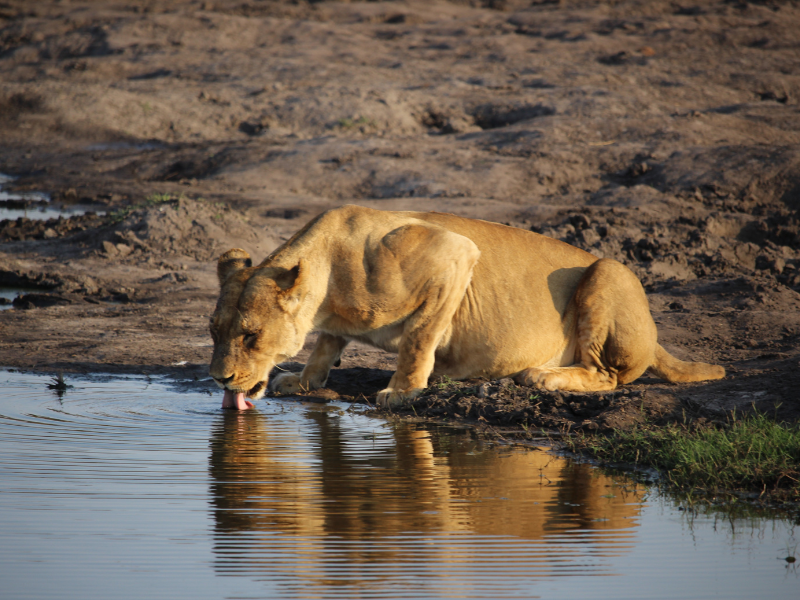
The lions of Hwange are less famous than those of the Masai Mara and less documented than those of the Serengeti. They are no less magnificent. Large coalitions of males hold territory across the park. If you have a guide who knows the park well, Hwange's lions will not disappoint.
"When a hundred elephants come to the waterhole at dusk and the light goes gold: that is the moment. That is what this place is."
Dalene Ferreira · Destination Africa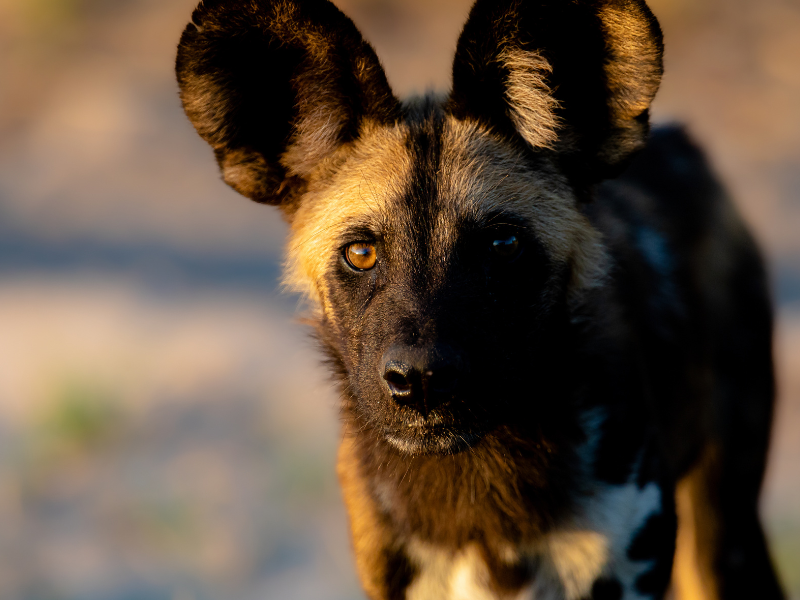
How to Experience Hwange Properly
The temptation with Hwange is to see it as a one-night add-on to Victoria Falls. But Hwange rewards time. Three nights is a minimum. Four is where the magic begins. By the third morning you are starting to understand the rhythms of the place. By the fourth you are reluctant to leave.
Where to Stay in Hwange
Twelve thatched chalets set within the Kalahari sand forest on the eastern edge of Hwange. The waterhole in front of camp is among the busiest in the park, the kind where you cancel dinner because something more interesting has arrived at the water.
An underground hide at the waterhole allows you to sit at water level as the elephants drink around you: a perspective so intimate it can feel almost transgressive. Eight suites. Extraordinarily attentive team.
In a private concession bordering Hwange's northern boundary. Six tents. Walking safaris go further and stay longer than anywhere else in the park. For those for whom an authentic, unhurried, deeply immersive experience is the priority.
Chobe, Botswana — For Those Who Want More
Here is something most itineraries miss: Zimbabwe and Botswana share a border, and some of the most spectacular wildlife country in Africa sits directly across it. Chobe National Park is a forty-minute drive from Victoria Falls. For those with even two extra nights in their itinerary, the Chobe add-on is not optional. It is obligatory.
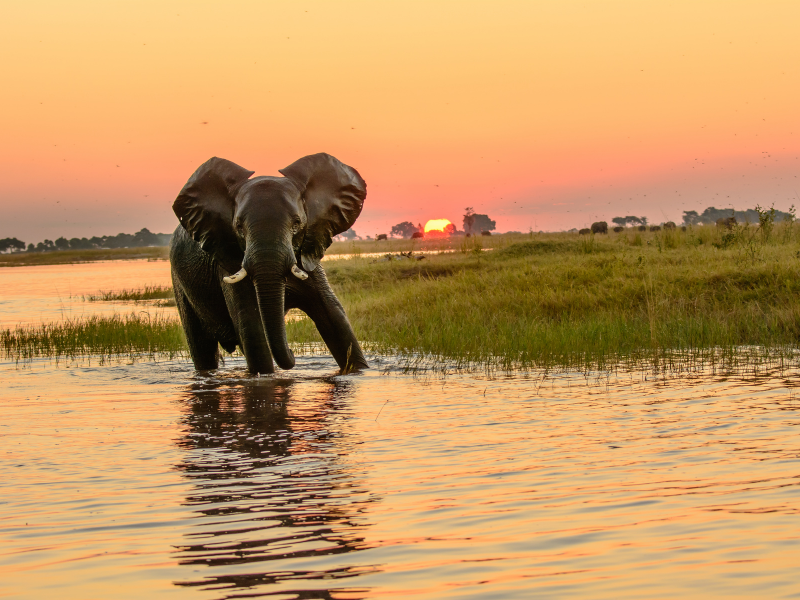
Chobe is famous for its elephants: an estimated 130,000 animals, the largest concentration of savanna elephants on earth, gathering along the Chobe River in the dry season in numbers that must be seen to be believed. The river itself is the theatre: boat safaris on the Chobe move you silently among herds drinking at the bank, crocodiles basking on sandbars, pods of hippo surfacing and submerging, and an extraordinary concentration of plains game across the floodplain behind them.
How It Connects to Your Zimbabwe Journey
The classic sequence is: Victoria Falls (2 to 3 nights), Hwange (3 to 4 nights), then Chobe (2 nights) before departing from Kasane airport. Alternatively, Chobe can open the itinerary for those flying into Kasane rather than Vic Falls. Either direction works beautifully. Each destination adds a layer to the previous one: waterfalls and culture, then deep bush and big elephants, then river and water safari. It is one of the most balanced safari itineraries in Africa.
Entry into Botswana from Zimbabwe requires a day visa, easily arranged. The transfer from Victoria Falls to Kasane takes you across the remarkable four-country corner of the world: the only point on earth where four nations share a single border, Zimbabwe, Botswana, Zambia, and Namibia. That fact alone is worth a photograph.
Chobe — What to Know Before You Go
- Kasane is the gateway town. Direct flights connect to Johannesburg and Maun.
- The Chobe riverfront is best visited in the dry season (May to October) when elephants gather in enormous numbers
- Boat safaris operate morning and late afternoon. The afternoon light on the river is extraordinary for photography.
- Game drives into the Savuti marshes require an extra night minimum; worth it entirely
- Sanctuary Chobe Chilwero is the benchmark luxury option on the riverfront
- Budget two nights minimum. Three allows a Savuti day trip.
"Most itineraries stop at Victoria Falls or Hwange. The ones that add Chobe tend to be the ones people talk about for the rest of their lives."
Dalene Ferreira · Destination AfricaDesigning Your Zimbabwe Journey
Every itinerary is different. Tell us what matters most and we will build it from there.
The Honest Truth About Safari in Zimbabwe
Honesty is important here, because the difference between a mediocre safari and a transformative one often comes down to a handful of things nobody bothers to tell you.
On guides
The single most important variable on any safari is your guide. More important than the lodge. More important than the vehicle. More important than the destination. A great guide changes what you see, changes what you understand about what you are seeing, and changes how you feel about Africa in a way that lasts for years. Zimbabwe has some of the finest field guides in Africa. The right camp has the right guides. This is where expertise matters.
On packing
Neutral colours: khaki, olive, stone. Layers matter. Mornings in the Zimbabwean bush in July and August are genuinely cold, sometimes below 5°C at 5am in the open vehicle. A fleece, a warm hat, and gloves are not a luxury. They are essential. The afternoon temperature will be 28°C. You will wear both in a single day.
On timing
Book early. Zimbabwe's best camps have between six and twelve beds. They sell out twelve months ahead in peak season. The question to ask is not "can I go in July?" but "is there space in July?" This is the kind of conversation we have early.
On what cannot be planned
No two days on safari are the same. No guide can predict what will happen. The leopard you see on day three was not in the plan. The wild dog kill that you witness for forty-five extraordinary minutes was not in the itinerary. The bull elephant that walks to within three metres of your vehicle and looks directly at you, and keeps looking, and shows no concern whatsoever: that is not a photo opportunity. That is a negotiation between two species, conducted in silence, in the African bush. That part cannot be written into a guide. It simply happens, to the people who go.
Practical Matters — The Details That Matter
Getting There
Most international routes connect through Johannesburg, with onward flights to Victoria Falls Airport (VFA) or Harare. Flying time from the UK to Johannesburg is approximately eleven hours. Connections to Vic Falls add a further two. If combining with Chobe, flying into Kasane directly from Johannesburg and reversing the itinerary allows for a seamless routing. We handle all flights and transfers: domestic light aircraft, road transfers, border crossings. The logistics of this region are genuinely complex. They should not be yours to manage.
Health & Entry Requirements
Yellow fever vaccination is required if arriving from a country with yellow fever risk. Malaria prophylaxis is strongly recommended for all areas covered in this guide. Hwange and Chobe are both malaria zones; Victoria Falls has lower but not zero risk. UK passport holders receive a visa on arrival in Zimbabwe (currently USD50 for a single entry). The KAZA Univisa (USD50) covers both Zimbabwe and Botswana and is essential if you are taking the Chobe add-on.
Currency & Money
USD is widely accepted at lodges, in Vic Falls town, and at most tourist facilities. Most camps are fully inclusive: all meals, game activities, laundry, and in many cases premium beverages. The main cash spend is tips. Tipping is not obligatory but is deeply appreciated, and we provide specific guidance on appropriate amounts when you travel.