A morning at
Mana Pools.
I do not write travel copy. I write what I have seen. This is an account of a single morning at Mana Pools National Park in Zimbabwe's Zambezi Valley, the place I consider the finest walking safari destination on the African continent, and why no vehicle is involved.
The alarm goes at five. Not five-thirty. Five. Because at five-fifteen your guide, a man who has been walking this specific stretch of the Zambezi floodplain since before you were born, will already be standing outside your tent in the dark, ready and patient, and the walk will begin before the light is strong enough to read by.
You dress in the dark. Earth tones only. Khaki shirt, olive trousers, boots that you broke in at home because breaking in boots in the field is a lesson you learn once. You step out of the tent and the night smell of the Zambezi hits you: river mud and wild sage and something you cannot name but will recognise for the rest of your life as Africa at dawn.
Why walking changes everything
Mana Pools is one of a small number of places in Africa where guests are permitted to walk unguided in the park. That is both the measure of how remote it is and, for those of us who have walked here, the most astonishing piece of information about the place. In practice, you will walk with a guide, and you will be glad of it.
A walking safari is categorically different from a vehicle safari. From a Land Cruiser you observe Africa. On foot, at ground level, moving at the pace of the bush rather than the pace of an engine, you are inside it. The sensory information is different. The vulnerability is different. And the relationship with your guide, who is reading the landscape three steps ahead and deciding at every moment whether to advance or hold or retreat, is different from any other relationship in travel.
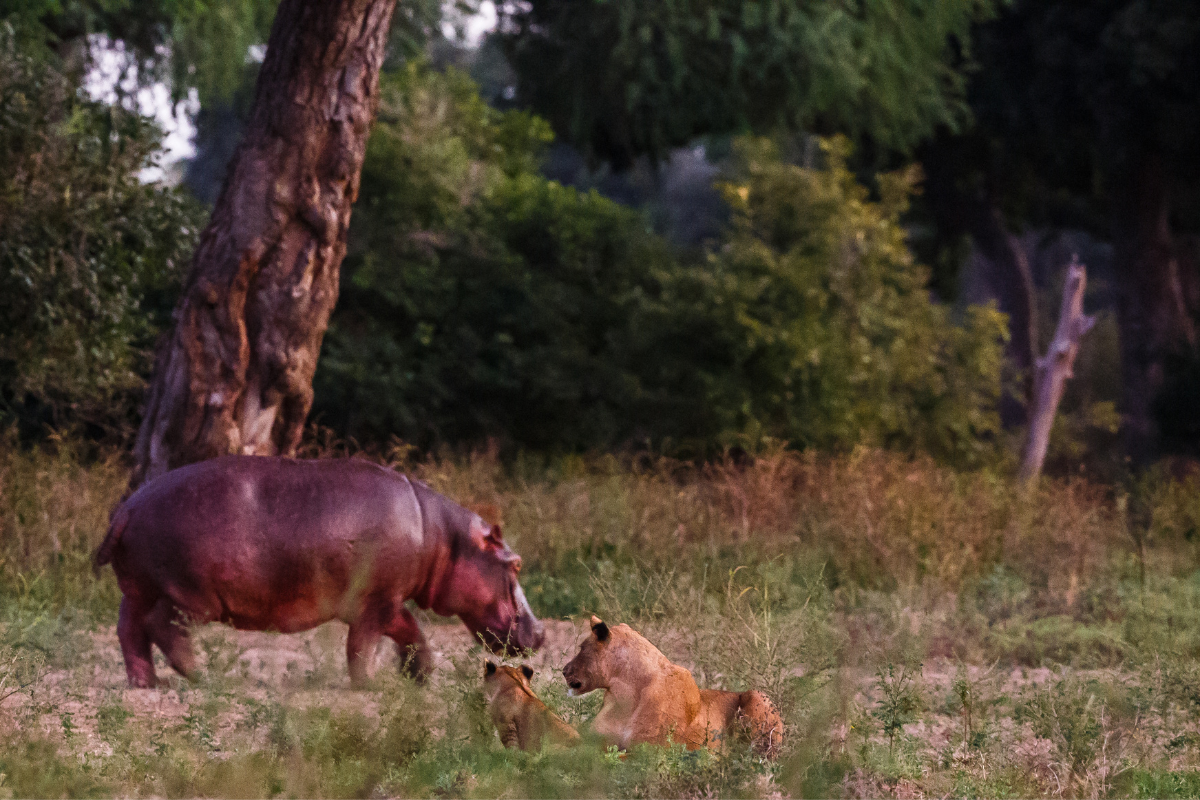
Your guide will carry a rifle. You will not think about it until he raises his hand once, sharply, and you stop moving absolutely, and then you see them: a lioness and two sub-adults, forty metres away, walking parallel to your line through the long grass along the riverbank. You are downwind. She knows you are there. She is not concerned. Your guide does not move. You do not move. For three minutes, which feel considerably longer, the lions walk past you in the early light and disappear into the jesse bush, and then your guide turns to you and says, very quietly: she has done this before.
The Zambezi at dawn
Mana Pools was designated a UNESCO World Heritage Site in 1984, recognising both its outstanding natural beauty and the integrity of its ecosystem. The park covers approximately 2,196 square kilometres along the southern bank of the Zambezi River, and in the dry months the river drops to reveal a series of floodplain pools, the mana of the Shona name, that draw wildlife from across the valley.
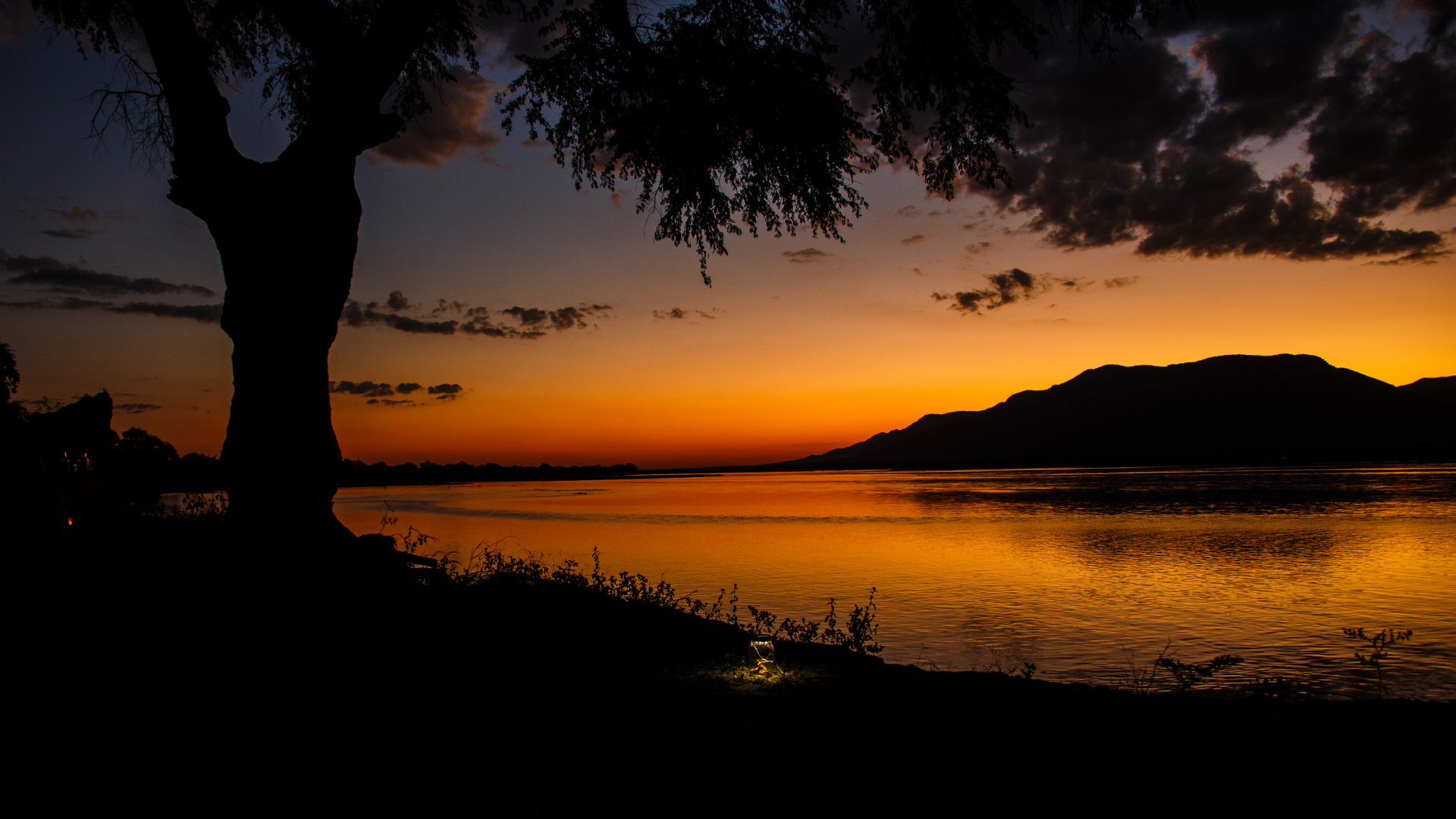
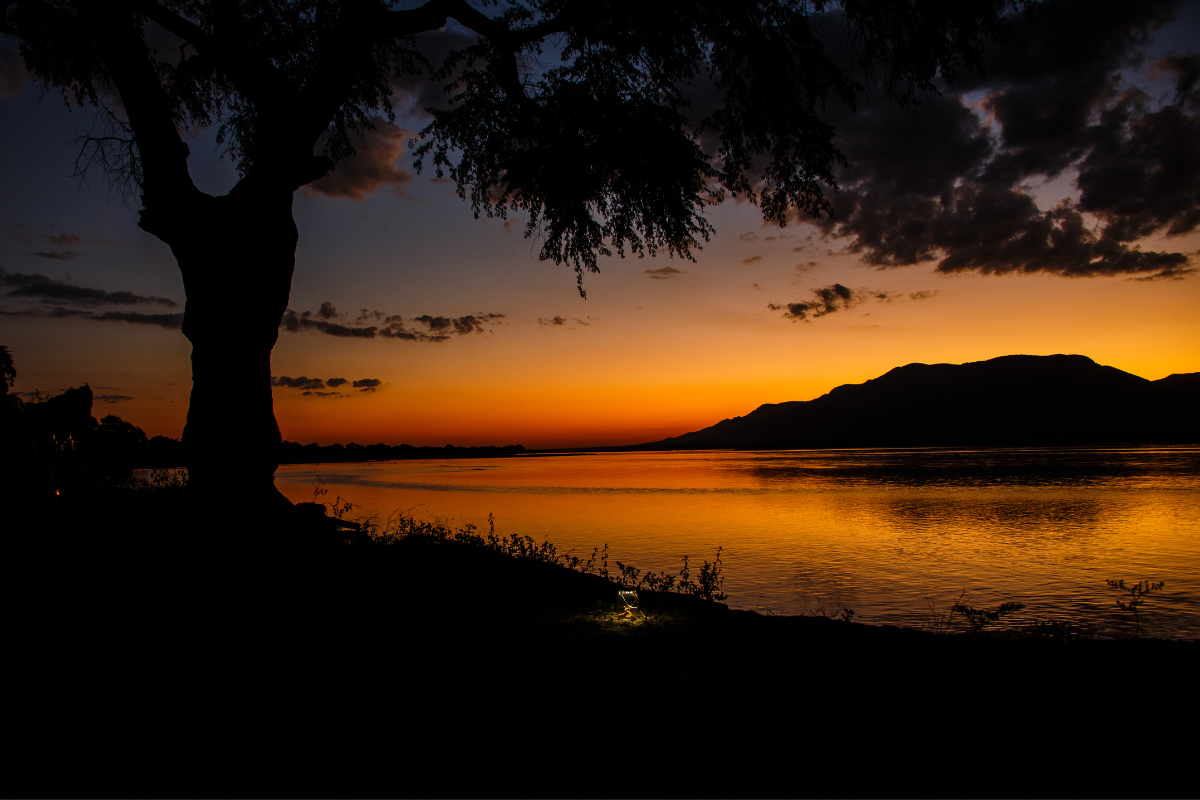
The Zambezi at dawn in September is the kind of thing that produces silence in people who talk for a living. The light comes slowly, first a grey suggestion on the far bank in Zambia, then a strengthening rose that turns the water copper and then gold. The hippos that spent the night grazing on the floodplain move back to the river in small groups, huffing and grumbling as they go. A fish eagle calls once, then again. Three elephants stand knee-deep in the shallows, drinking with the unhurried purposefulness of creatures who have all morning and know it.
"Mana Pools is where walking safaris reach their highest form. No vehicle between you and the bush. Just a guide who has tracked these animals for thirty years and knows exactly where to stand."
Dalene, Founder, Atlas AtelierThe wild dogs of Mana
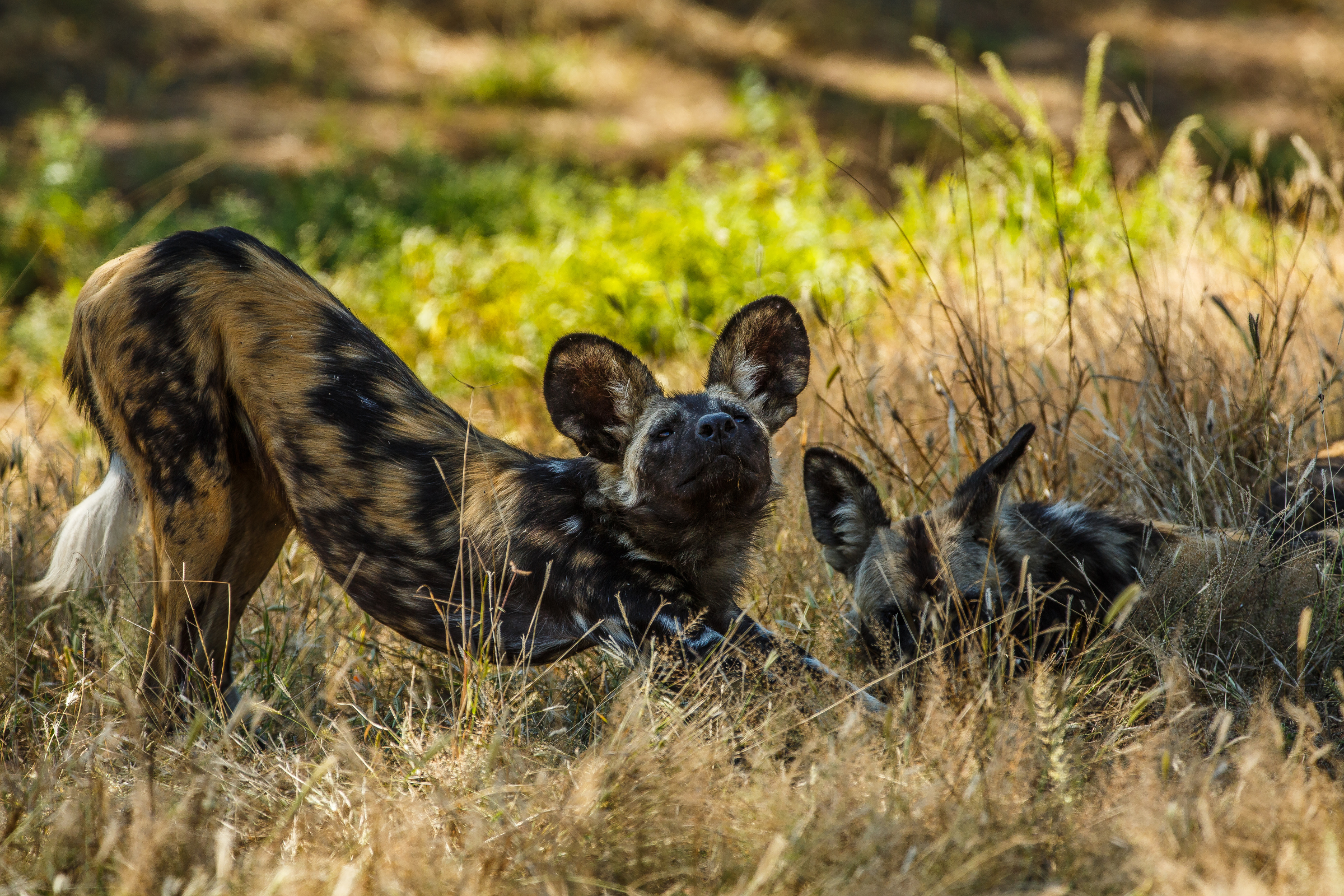
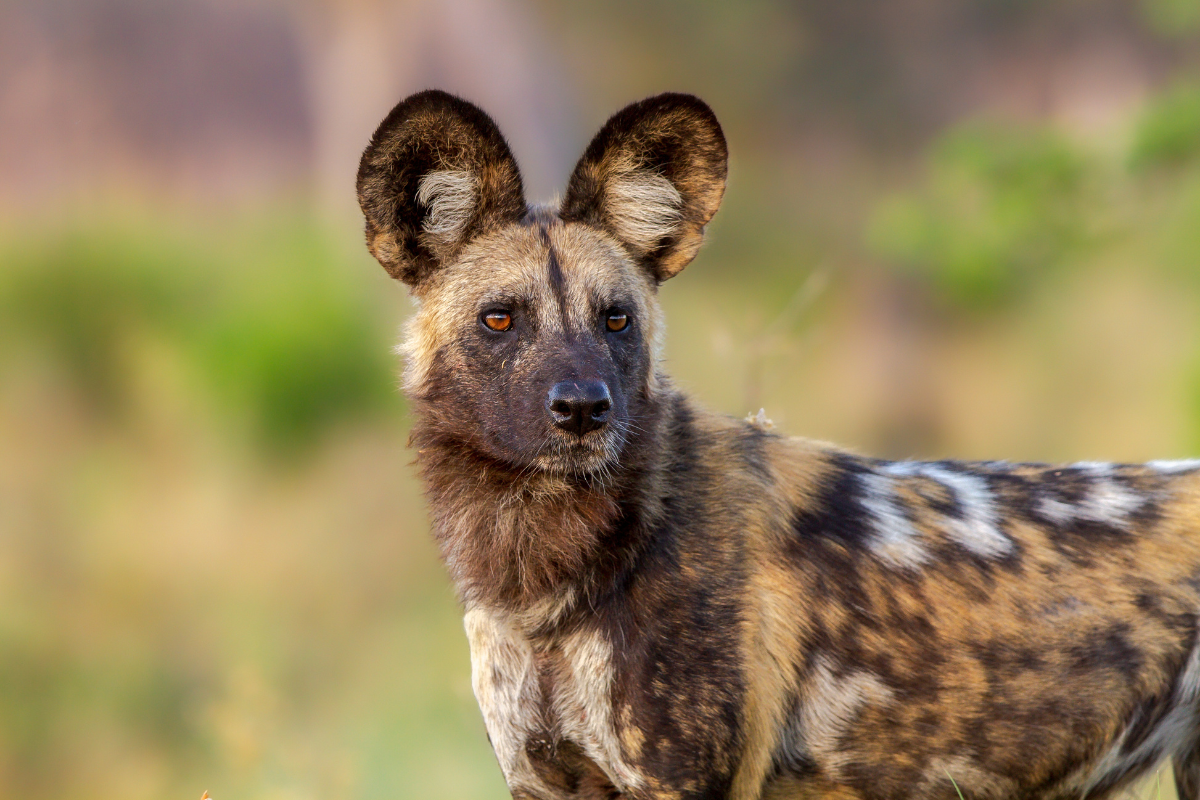
Mana Pools holds one of Zimbabwe's most studied and most reliably encountered African wild dog populations. In the early morning, before the heat forces them to rest, the packs hunt along the floodplain edge with a coordination that operates entirely without audible communication. They flank, they cut, they relay across the terrain in a pattern that only becomes legible to a human observer after watching it several times. The prey animal rarely escapes.
The wild dog is the most successful large predator in Africa by kill rate, with an approximate 80 percent success rate that compares to a lion's 30 percent and a cheetah's 50 percent. They are also critically endangered, with fewer than 6,600 animals estimated globally. Watching a Mana pack work in the morning light, knowing both of those statistics, produces a particular quality of attention in a person.
You watch them until they have finished, until the pack has fed and the birds have descended and the activity on the floodplain has returned to its ordinary rhythm, and then you walk back to camp for breakfast as the sun comes up properly over Zambia, and the morning has already been something you will spend years describing.
What it leaves behind
I have taken clients to Mana Pools who were, by their own account, experienced safari travellers. Kenya, Tanzania, Botswana, South Africa. They arrived with calibrated expectations and left, consistently, saying it was the finest wildlife experience they had ever had.
The reason, I think, is the walking. Vehicle safaris, however exceptional, maintain a membrane between you and the place you are in. The vehicle is comfortable, the seat is elevated, the glass is clean. It is wonderful, and it is still separated from Africa by four wheels and a chassis.
Walking at Mana Pools removes the membrane. You are in the landscape at ground level, at pace, breathing the same air as the animals, aware in a physical way of exactly where you are and exactly what is sharing the space with you. It changes something. Not dramatically, not in a way that is easy to describe at a dinner party. But something.
I have been walking at Mana Pools since I was a child. It still changes something in me every time.
Africa has been waiting.
When you're ready, so are we.
Mana Pools, Hwange, Victoria Falls. I know these places the way most people know their own neighbourhoods. I would love to begin this for you.