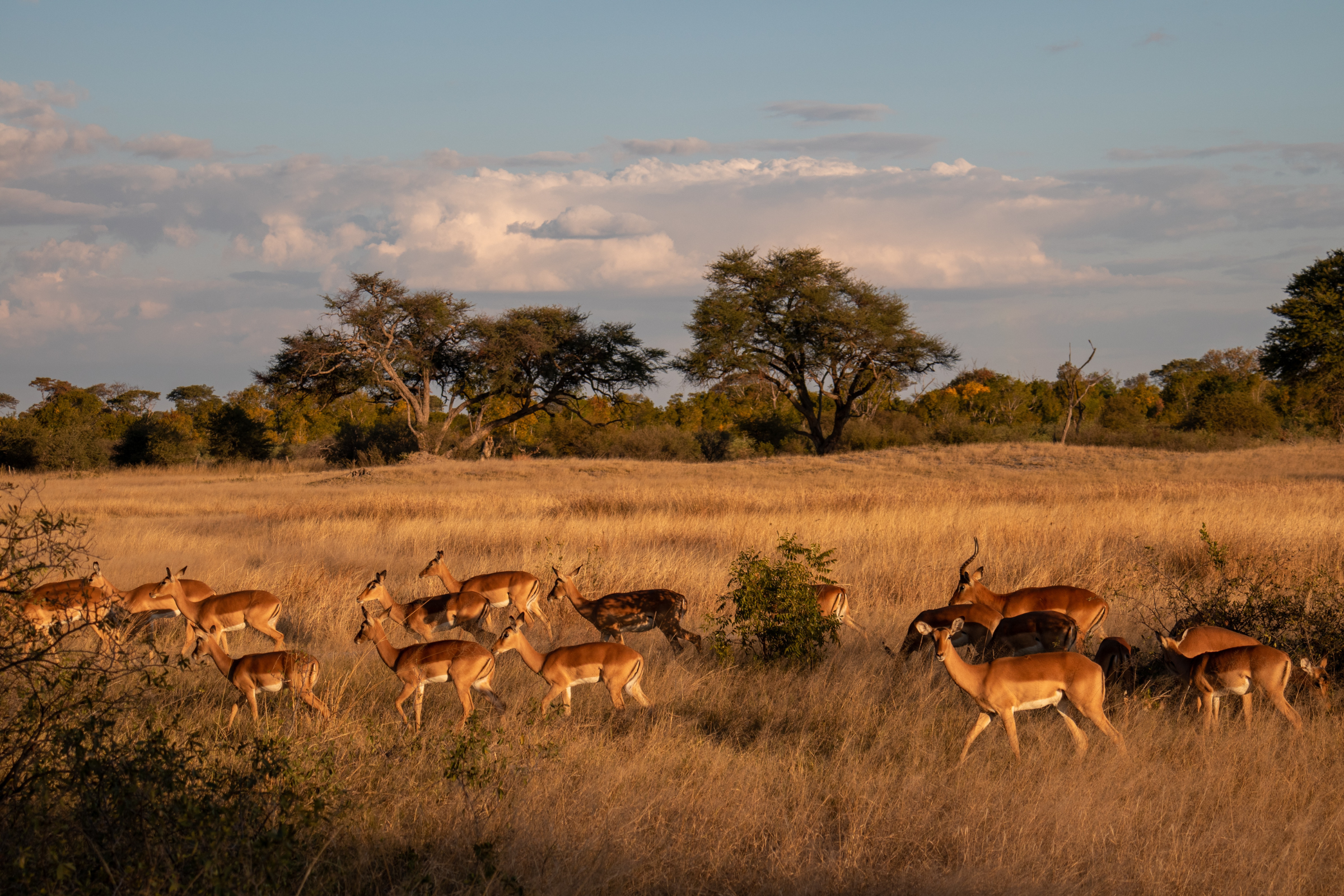
Hwange in dry season:
the elephants, the silence,
and what the brochures never tell you.
Hwange National Park covers 14,651 square kilometres of northwest Zimbabwe, making it larger than the entire country of Switzerland. Most people who visit African safari destinations never hear of it. That is precisely the point. What Hwange offers, in the dry months between June and October, is the continent's most consistently extraordinary elephant experience — and almost no one is there to see it.
I am going to be direct about something that most safari marketing is careful to obscure. The best game viewing in Africa is not in the Masai Mara. The best game viewing in Africa is in the places where the game density is highest relative to the number of vehicles. By that measure, which is the only measure that actually matters when you are sitting in a Land Cruiser at dawn, Hwange in dry season is among the finest wildlife experiences on the continent.
In peak season at the Mara, you may find twelve vehicles around a single lion. In Hwange in September, you may find one. Yours.
Understanding the waterhole system
Hwange sits on the edge of the Kalahari sands, a geological formation that is almost entirely without surface water. In the wet season, temporary pans fill and the animals disperse across the park in search of grazing and water. In the dry season, as those pans evaporate and the grasses desiccate, the wildlife has only one option: the permanent, pump-fed waterholes that were first established in the 1930s and have been maintained by Zimbabwe National Parks ever since.
There are approximately 60 of these artificial waterholes across Hwange, pumped by solar and diesel equipment that keeps them flowing year-round. In the dry months, every elephant, lion, leopard, wild dog, sable, roan, and painted wolf within a radius of many kilometres knows exactly where the water is. They come to it with the regularity and the seriousness of a commitment.
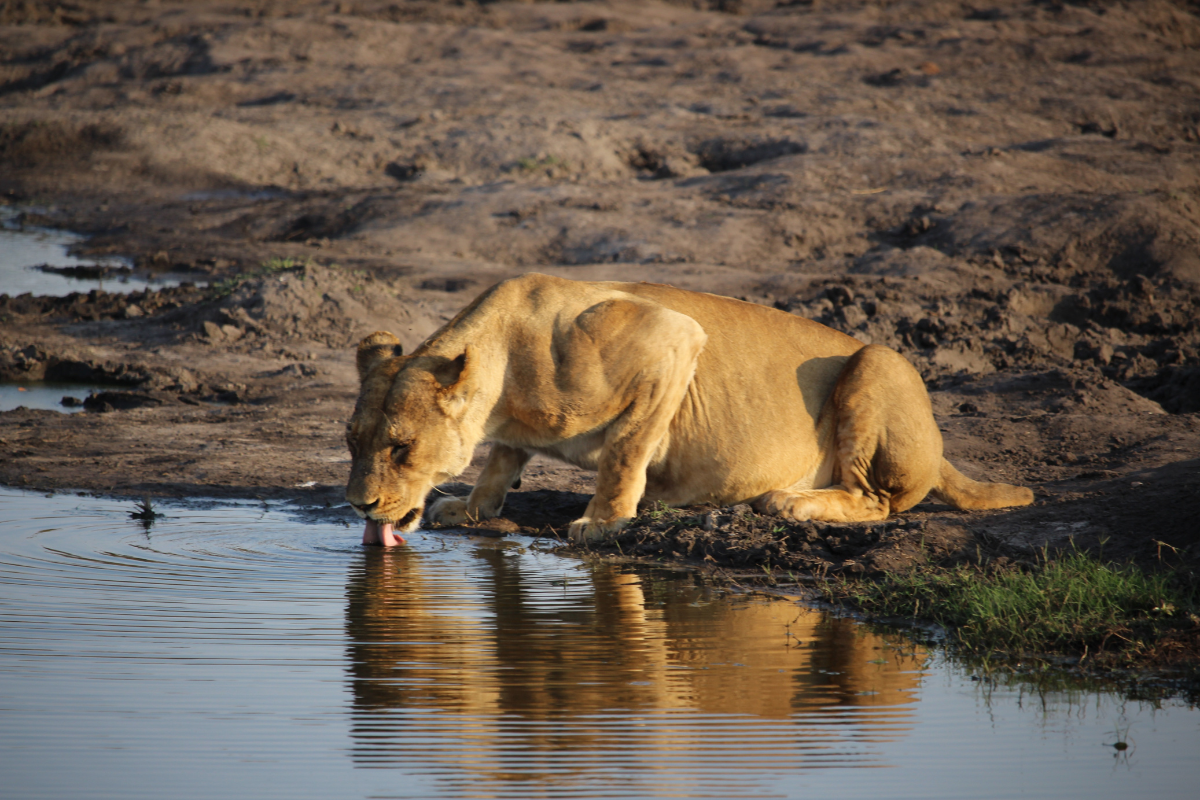
The camps I recommend in Hwange are selected on a single primary criterion: proximity to the most productive waterholes. An exceptional camp three kilometres from an active pan is, in October, considerably less valuable than an average camp fifty metres from one. The logic is simple, and it is the kind of logic that only reveals itself to someone who has actually spent time here.
Somalisa Expeditions, operated by African Bush Camps, sits close to a series of productive pans in the eastern section of the park and consistently delivers encounters of a quality that clients describe in terms usually reserved for more famous destinations. Little Makalolo, an intimate camp run by Wilderness Safaris, offers access to an extraordinary waterhole that in peak dry season can produce afternoon sightings that a wildlife photographer would plan a career around. Both camps have guiding of a standard that transforms competent game viewing into genuine understanding.
"The difference between a good camp and a great one in Hwange is almost never the accommodation. It is always the guide and the waterhole. I build every Hwange itinerary around those two things first."
Dalene, Founder, Atlas AtelierThe elephants
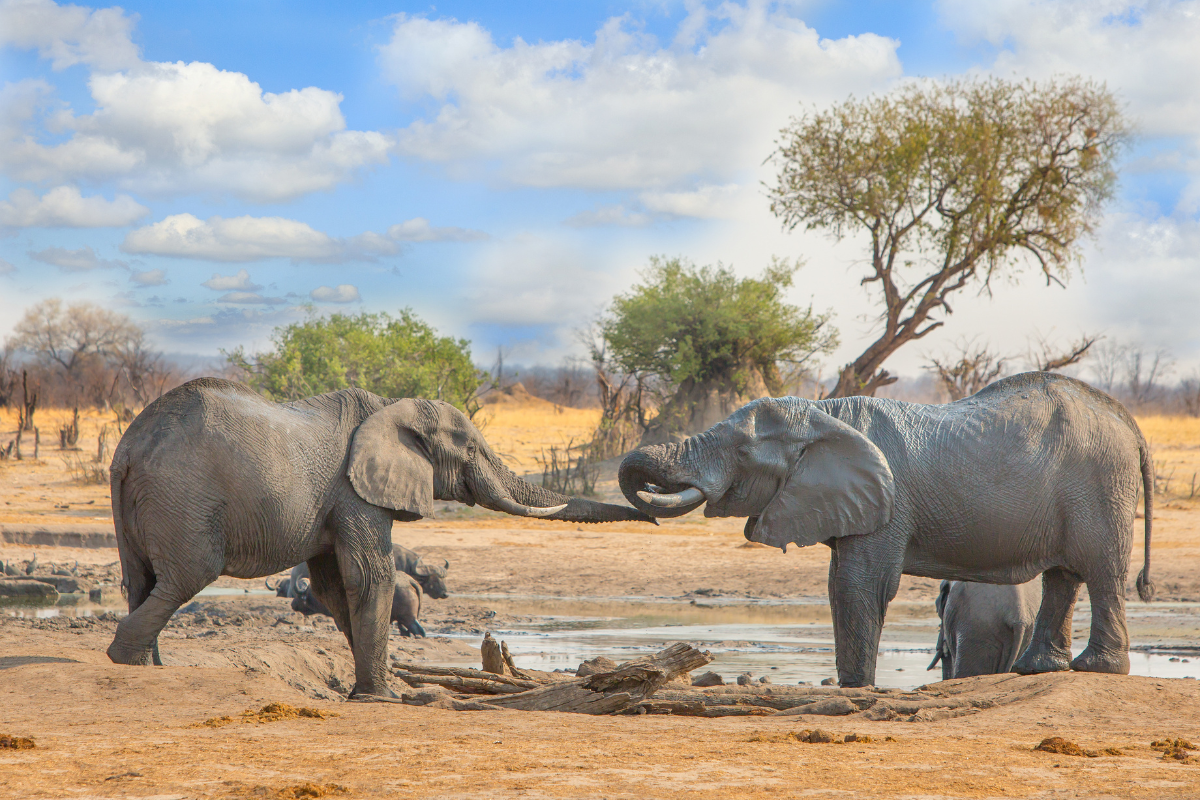
Hwange's elephant population is the largest in Zimbabwe and one of the largest in Africa. Conservative estimates from Zimbabwe National Parks place it at around 45,000 animals, though survey data from aerial counts has suggested the true number may be considerably higher. To put that in context: Amboseli National Park in Kenya, which built its international reputation almost entirely on its elephant population, holds approximately 1,600 animals in a park roughly one-twentieth the size of Hwange.
The elephants of Hwange are, for the most part, habituated to the presence of safari vehicles in a way that produces viewing of extraordinary intimacy. It is entirely normal to sit at a waterhole and watch three, four, five hundred animals arrive over the course of a single afternoon. They come in family groups, led by matriarchs of forty or fifty years of age whose knowledge of the landscape is encoded in twenty years of learned behaviour. They know where the water is. They know which pan is fullest. They know, in a way that is both ancient and precise, exactly what they are doing.
The painted wolves
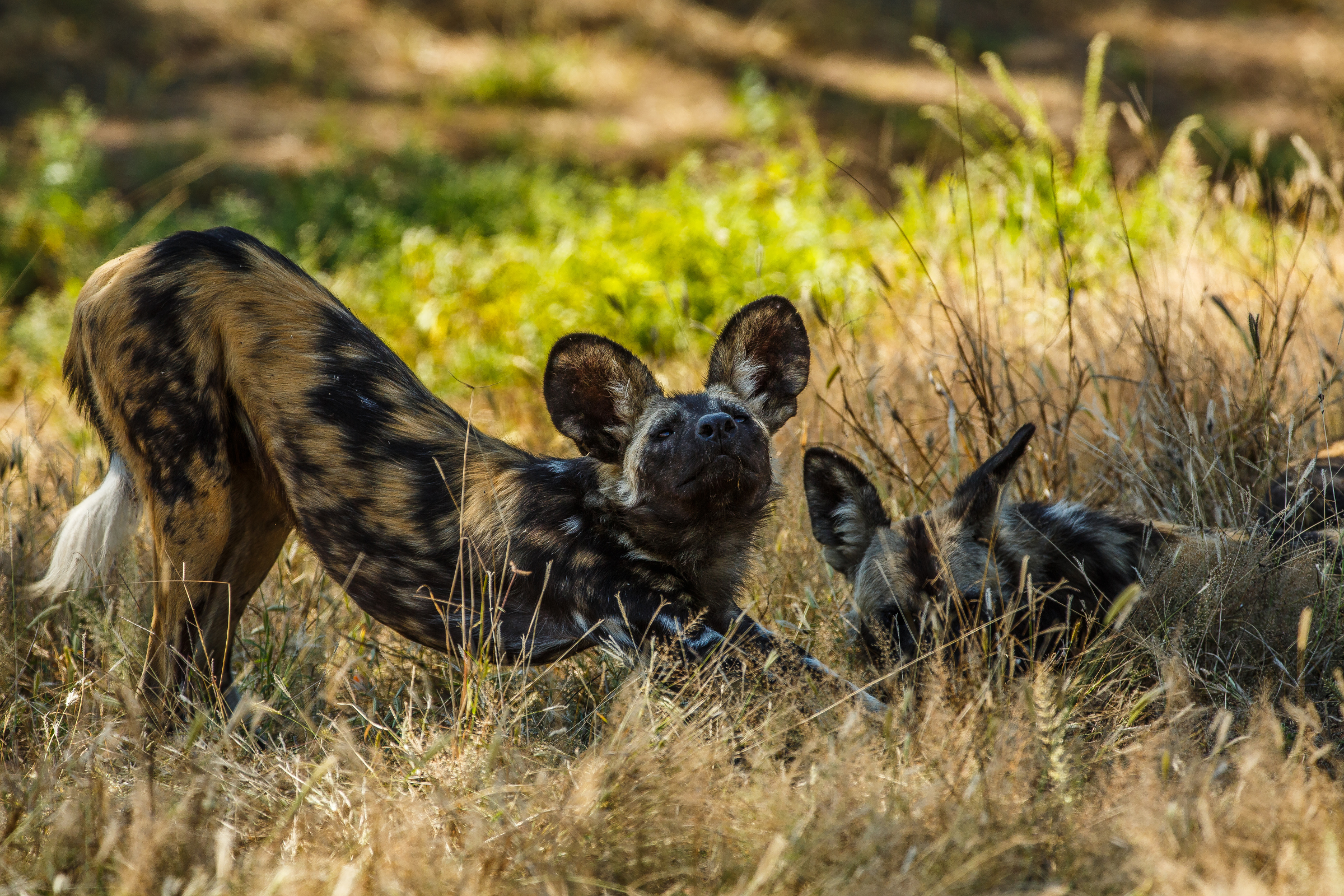
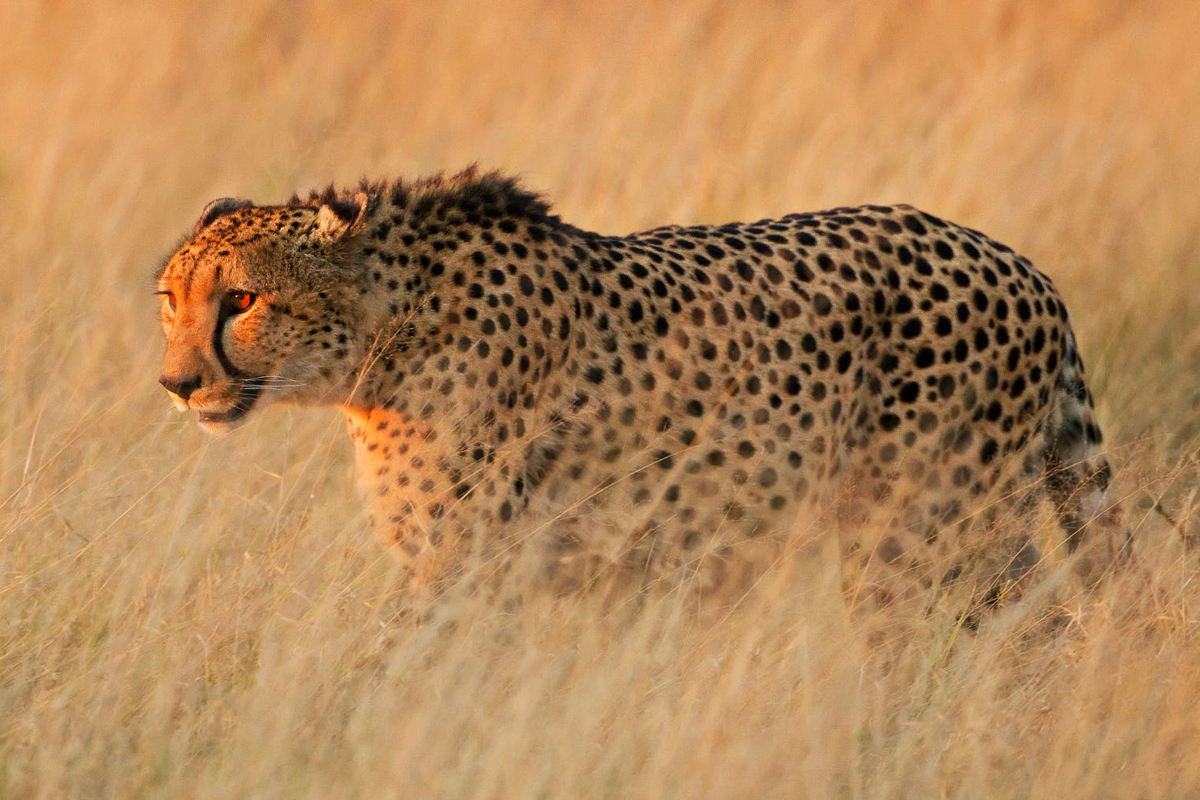
Hwange holds one of Zimbabwe's most important African wild dog populations. The species, also known as the painted wolf or African hunting dog, is critically endangered across the continent: the global population is estimated at fewer than 6,600 animals. Hwange's packs are among the most studied and most reliably encountered in Africa, and a morning spent tracking a pack on a hunt is an experience that places the Masai Mara's big cat sightings in a rather different light.
Wild dogs hunt in the early morning and late afternoon, using a stamina strategy that allows them to run their prey to exhaustion over distances of several kilometres. Their success rate is the highest of any large African predator at approximately 80 percent. Watching a pack of 15 or 20 dogs working together with a coordination that suggests genuine communication is, for many clients, the defining wildlife moment of their African travels. Not the lion. The wild dogs.
The silence
There is something about Hwange that is harder to write about than the elephants or the wild dogs or the waterhole mathematics. It is the quality of the silence.
In the middle of the day, when the heat has driven every sensible creature into the shade and the game drive has returned to camp and the camp itself has gone quiet, the sound of Hwange is a particular thing. The wind moves through the mopane scrub with a dry, papery whisper. A distant bird calls once and does not repeat itself. The sky is an absolute blue, unmarked by cloud or contrail. And the stillness is not the absence of sound but the presence of something else entirely: the sense of a landscape operating entirely on its own terms, at its own pace, indifferent to the fact that you are in it.
I have been going to Hwange since I was a child. That stillness still catches me.
Leave the rest
with me.
I know which camps sit closest to the most productive waterholes. I know which guides have spent thirty years learning these specific animals. A conversation is where it begins.